01603 327 053



Practitioners
Patients
- Genotyping
State-of-the-art genotyping services - Pharmacogenetics
Personalised approach to prescribing medications - Metagenomic Sequencing
Profiling of gut, oral and vaginal microbiome - Bloodborne Infection Screening
Detection of key blood-borne infections. - Contract Research
Tailored solutions support for the entire assay lifecycle

PGx FOR GENERAL PRACTITIONERS
Personalised Medicine for Everyday Practice
AttoDiagnostics’ Pharmacogenomic Testing equips General Practitioners with actionable genetic insights to tailor treatments, minimise adverse drug reactions, and enhance patient outcomes across multiple therapeutic areas.
- Covers 115+ commonly prescribed medications
- Identifies genetic factors influencing drug absorption, metabolism, and response
- Supports safer prescribing, improved medication adherence, and reduced polypharmacy risks
- UK-based laboratory

Pharmacogenomics for General Practice
Prescribing the right medication at the right dose has never been more complex. With increasing patient comorbidities and growing concerns around polypharmacy, genetic variability in drug response plays a critical role in treatment efficacy and safety.
AttoDiagnostics provides GPs with a robust, clinically validated PGx solution backed by ThermoFisher Scientific and Illumina platforms. Our integrated Clinical Decision Support System (CDSS) incorporates guidelines from CPIC, PharmGKB, FDA, and DPWG, offering GPs evidence-based recommendations at the point of care.
Whether managing cardiovascular risk, mental health, pain, or chronic illness, our solution enhances therapeutic decisions by accounting for each patient’s genetic profile.

-
Comprehensive Medication Management
PGx testing empowers GPs to reduce trial-and-error prescribing by evaluating drug-gene interactions across a wide spectrum of medications. From antidepressants to anticoagulants, the report guides medication selection, dosage adjustment, and potential substitutions.
-
Improved Safety & Reduced ADRs
With insight into genetic predispositions, GPs can proactively avoid medications likely to trigger adverse reactions such as dizziness, bleeding, fatigue, gastrointestinal issues, and serotonin toxicity.
-
Informed Dosage Decisions
Understanding how a patient metabolises a drug ensures that the prescribed dose is both safe and effective—minimising side effects and improving therapeutic success.
What Our Pharmacogenomics Report Covers
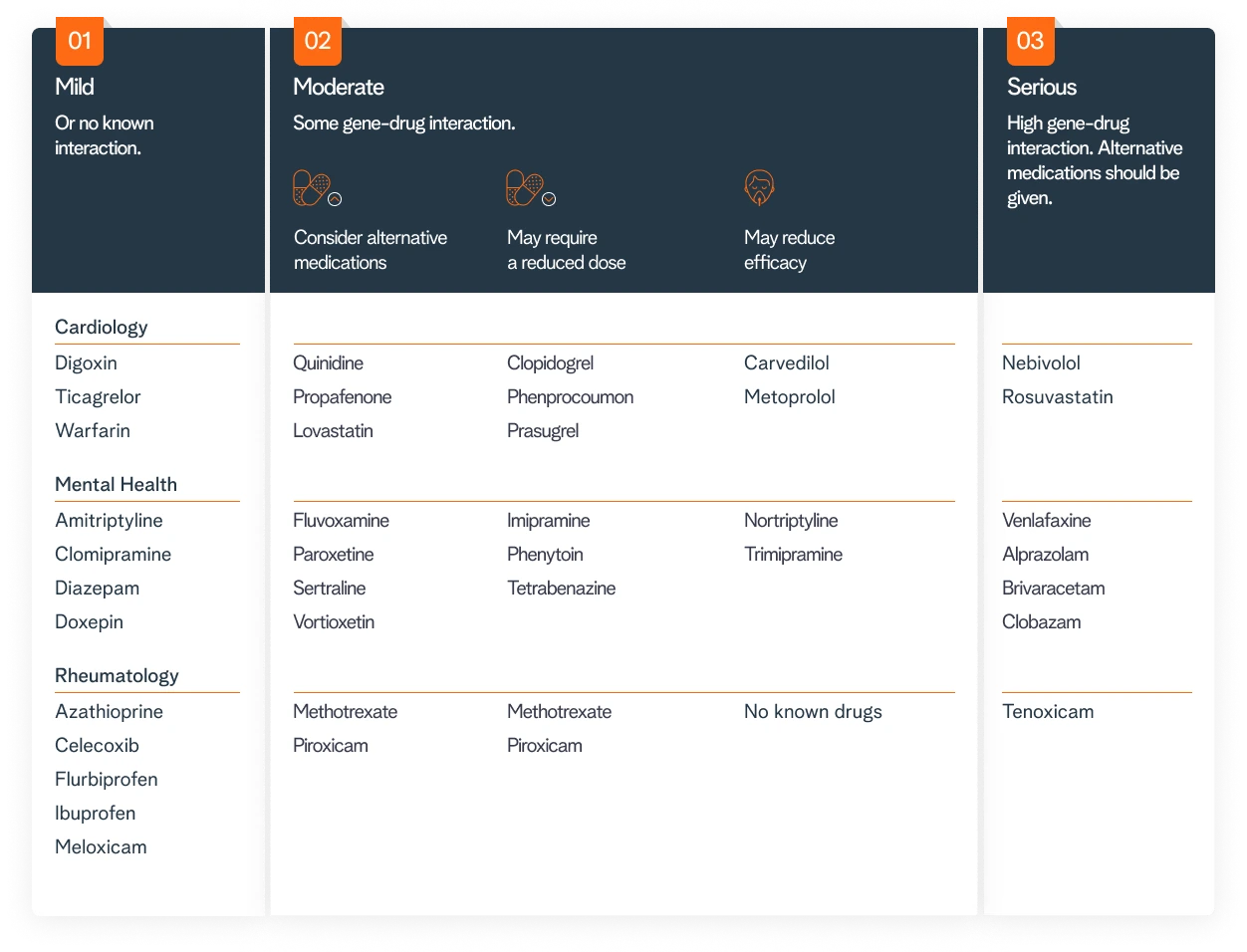
The report is presented in two formats: a high-level clinical summary for fast interpretation, and a detailed gene-by-gene analysis. It highlights drug-gene interactions, recommended dosage changes, alternative options, and potential contraindications based on the patient’s unique genotype.
Pharmacogenomics Testing Panel
AttoDiagnostics offers a preemptive PGx panel assessing over 115 commonly prescribed medications across over 35 different medical conditions:
Get a Business QuoteCardiovascular
Mental Health
Pain Management
Gastroenterology
Oncology
Rheumatology
Endocrinology
Neurology
Infectious Disease
Urology
Reproductive Health
How Comprehensive PGx Testing Work
Genetic testing for commonly prescribed medications is a straightforward procedure. Your patient will need to conduct a buccal swab which can be done conveniently at home or in a healthcare setting led by a sample collection professional. Once collected, the swab is returned to the AttoDiagnostics pharmacogenomics testing facility, where we analyse the sample in our laboratory to produce the PGx report.
Step 1
Sample Collection
Our preferred solution is to collect a buccal swab from the patient. This swab can be administered at the clinic, or mailed to the patient for them to conduct at their leisure. The swabs have a long shelf life and are safe to transport via the post, offering flexibility and ease for both the practice and the patient.

Step 2
Genetic Analysis
The collected sample is analysed in our state-of-the-art laboratory to identify genetic variations that influence drug metabolism and medication response. At AttoDiagnostics, we use ThermoFisher or Illumina platforms with a validated panel of drug-metabolising enzymes (DMEs) and protein transport markers. This ensures broad coverage across multiple therapeutic areas relevant to general practice.

Step 3
Comprehensive Report
Your patient will receive a detailed report outlining the implications of the genetic findings on medication selection and dosing. This report includes a ‘quick view’ summary of medication types with elevated or reduced response risks. An in-depth gene-by-gene analysis provides deeper insight into clinical recommendations, potential drug-drug interactions, and treatment optimisation—especially critical for managing polypharmacy and improving patient outcomes in primary care.