01603 327 053



Practitioners
Patients
- Genotyping
State-of-the-art genotyping services - Pharmacogenetics
Personalised approach to prescribing medications - Metagenomic Sequencing
Profiling of gut, oral and vaginal microbiome - Bloodborne Infection Screening
Detection of key blood-borne infections. - Contract Research
Tailored solutions support for the entire assay lifecycle

PGx FOR RA & AUTOIMMUNE
Personalised Rheumatology Treatment
AttoDiagnostics offers PGx testing to support rheumatologists and autoimmune specialists. Our reports help predict how your patients will respond to immunosuppressants, NSAIDs, and disease-modifying therapies.
- Genetic testing for autoimmune and rheumatology medications
- Covers immune system regulators, pain relief, and anti-inflammatory drugs
- Supports treatment for conditions such as: Rheumatoid arthritis (RA), Psoriatic arthritis, Lupus (SLE), Multiple sclerosis (MS), Ankylosing spondylitis, Sjogren’s syndrome

Pharmacogenomics for Rheumatology and Autoimmune Conditions
Prescribing medications for autoimmune conditions has become increasingly complex due to genetic factors that influence drug metabolism and response. Many medications now include genetic interaction insights, making pharmacogenomics an essential tool for rheumatologists, immunologists, pain specialists, and other healthcare providers managing autoimmune diseases.
Our pharmacogenomic (PGx) testing—also known as pharmacogenetics—utilises advanced Thermofisher and Illumina platforms alongside a robust Clinical Decision Support System (CDSS). This system integrates guidelines from CPIC, PharmGKB, FDA, and DPWG, enabling rheumatologists, immunologists, pain specialists, pharmacists, and other prescribing clinicians to make personalised, evidence-based treatment decisions for immunosuppressants and disease-modifying antirheumatic drugs (DMARDs).

-
Personalised Medication Management
For people with autoimmune conditions, finding the right medication can be a frustrating process of trial and error. Pharmacogenomic (PGx) testing analyses an individual’s genetic profile to predict how they will respond to different treatments, helping rheumatologists and specialists prescribe the most effective medication sooner. This approach reduces delays in symptom relief and lowers the risk of serious side effects such as drug-induced liver damage, infections, and complications from long-term immunosuppression.
-
Polypharmacy Considerations & Reduced ADRs
Autoimmune patients are often prescribed multiple medications (polypharmacy), which increases the risk of drug-drug interactions and treatment complications. PGx testing helps identify the safest and most effective medication alternatives or combinations by assessing both genetic risks and potential drug-drug interactions. Some individuals may be more susceptible to severe infections, liver toxicity, or kidney problems due to how their body metabolises certain drugs. By understanding these risks in advance, specialists can make more personalised and safer prescribing decisions, ensuring treatments work together without increasing harm.
-
Optimised Dosage
Many autoimmune medications—especially DMARDs and immunosuppressants—require careful dose adjustments to balance effectiveness with side effects. PGx testing helps determine the optimal dosage based on how quickly a person metabolises a drug, reducing the risk of nausea, extreme fatigue, or gastrointestinal issues that often occur at higher doses.
What Our Pharmacogenomics Report Covers
Our PGx report is divided into two sections: a quick overview and a detailed analysis. The quick overview highlights key medication interactions, providing clinicians with fast, actionable insights. The detailed report explores genetic variations and their impact on autoimmune medications, helping specialists make more informed treatment decisions.
Additionally, clinicians gain access to a clinical decision platform that can investigate drug-drug interactions, ensuring safer prescribing for patients on multiple medications (polypharmacy). This enables healthcare providers to adjust treatments proactively, reducing risks and improving patient outcomes.
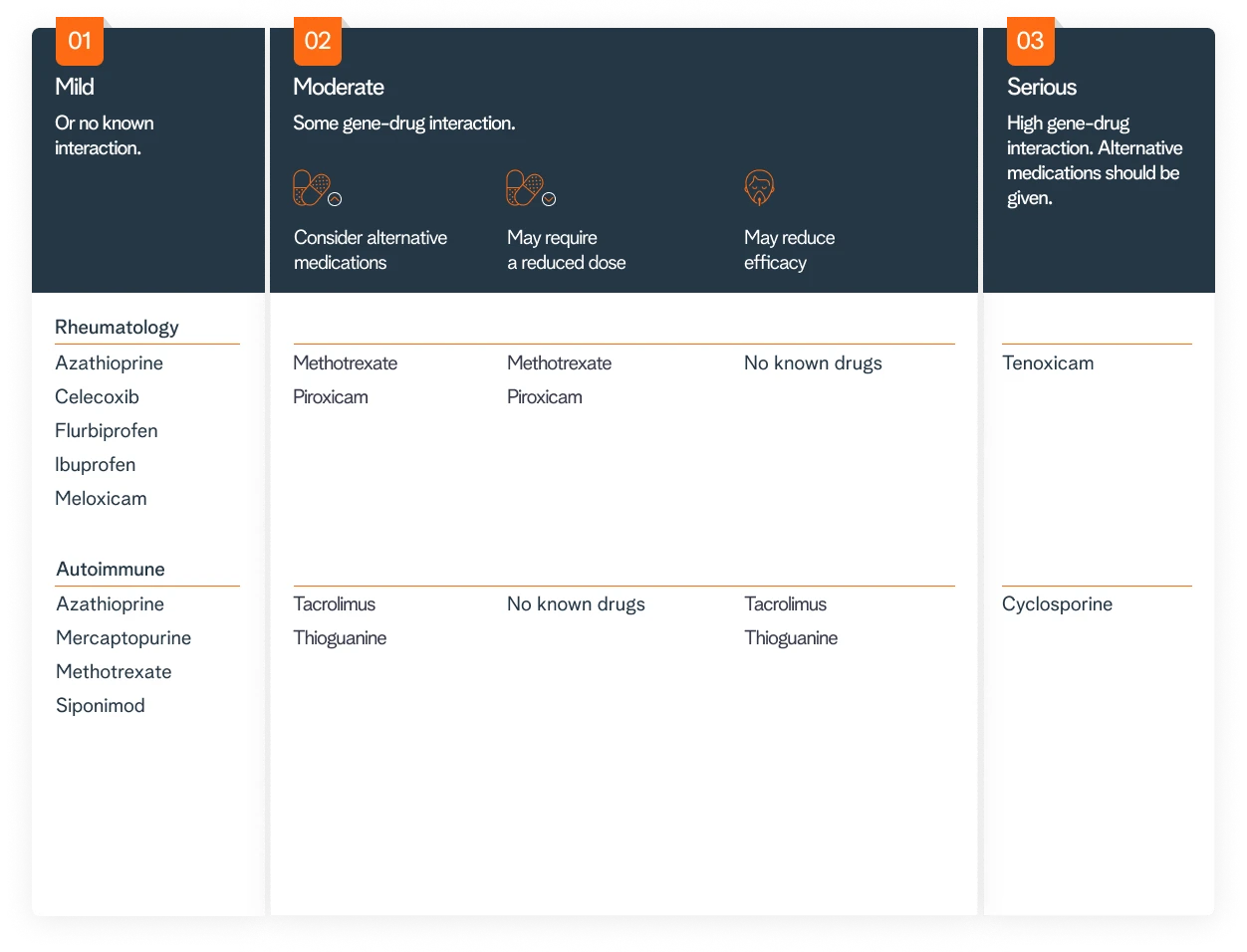
Pharmacogenomics Testing Panel for RA & Autoimmune Medications
AttoDiagnostics provides genetic panels specifically tailored to medications used in treating autoimmune conditions, ensuring the best possible care for disorders like rheumatoid arthritis, lupus, and other inflammatory diseases.
Get a Business QuoteRheumatoid Arthritis Medications
Autoimmune Medications
How Rheumatology and Autoimmune Pharmacogenomic Testing Works
Genetic testing for autoimmune and rheumatology medications is a simple and non-invasive process. Patients provide a buccal swab sample, which can be collected at home or in a healthcare setting with the assistance of a sample collection professional. Once completed, the sample is returned to the AttoDiagnostics pharmacogenomics testing facility, where it undergoes laboratory analysis to generate a detailed PGx report.
Step 1
Sample Collection
Our preferred method is a buccal swab, which is quick, painless, and highly effective. The swab can be collected in-clinic or mailed directly to the patient for at-home collection. With a long shelf life and secure postal transport, the process is designed for maximum convenience and reliability.

Step 2
Genetic Analysis
The collected sample is processed in our state-of-the-art laboratory, where we analyse genetic variations that influence drug metabolism, efficacy, and risk of adverse drug reactions (ADRs). We utilise Thermo Fisher and Illumina platforms, examining a validated panel of drug-metabolising enzymes (DMEs) and protein transport markers.

Step 3
Comprehensive Report
Patients receive a detailed pharmacogenomic report, outlining how their genetic profile influences medication selection and dosing. The report includes a quick overview highlighting medication suitability, a detailed breakdown of genetic markers and their implications for autoimmune treatment response and drug-drug interaction analysis for polypharmacy patients, to allow safer prescribing with lower risk of adverse drug reactions.