01603 327 053



Practitioners
Patients
- Genotyping
State-of-the-art genotyping services - Pharmacogenetics
Personalised approach to prescribing medications - Metagenomic Sequencing
Profiling of gut, oral and vaginal microbiome - Bloodborne Infection Screening
Detection of key blood-borne infections. - Contract Research
Tailored solutions support for the entire assay lifecycle

PGx FOR MENTAL HEALTH
Improved Psychiatric Outcomes
AttoDiagnostics offers comprehensive Pharmacogenomics Testing for mental health practitioners, psychiatrists and harm reduction service providers.
- Over 35 psychiatric medications covered
- Includes: ADHD, Depression, Anxiety, Bipolar Disorder, Schizophrenia
- Collect DNA with a simple at-home buccal swab
- UK-based laboratory

Better Treatment Outcomes, First Time
Prescribing mental health medication effectively has become increasingly complex due to genetic interactions and potential interactions with other prescribed medications. As a result, many medications now include genetic interaction insights or guidance, a crucial consideration for all doctors, psychiatrists, and mental health professionals.
Our state-of-the-art PGx testing solution utilises Thermofisher and Illumina platforms, alongside a world-class Clinical Decision Support System (CDSS). This system leverages a comprehensive database of the latest research and guidelines from CPIC, PharmGKB, FDA, DPWG, and other leading organisations. By providing valuable insights into personalised and evidence-based treatment options, our approach enhances the efficacy and safety of mental health treatments by considering your patients' genetic profiles.

-
Personalised Medication Management
Pharmacogenomic (PGx) testing enables the selection of the most appropriate medications by analysing a patient’s genetic profile and predicting potential drug-gene interactions. This approach reduces the reliance on trial and error, resulting in faster, more effective treatment outcomes. It also helps mitigate the risk of serious adverse drug reactions, such as bleeding with anticoagulants, statin-induced myopathy, and drug-induced arrhythmias.
-
Enhanced Efficacy and Reduced ADRs
By selecting cardiovascular medications informed by an individual’s genetic profile and other clinical factors, pharmacogenomic (PGx) testing optimises therapeutic efficacy and improves clinical outcomes. It also enables the identification of genetic predispositions to adverse drug reactions, including bleeding, bruising, anaemia, fatigue, bradycardia, cough, and sexual dysfunction, among others.
-
Optimised Dosage
Genetic insights from pharmacogenomic (PGx) testing guide dosage adjustments tailored to each patient’s metabolic profile, supporting the selection of higher or lower doses as appropriate. Personalised dosing enhances therapeutic efficacy while reducing the risk of adverse effects.
What Our Pharmogenomics Report Covers
The AttoDiagnostics PGx report has two main sections: A quick medication overview and a genetic deep dive. The quick overview, similar to the example below, provides PGx benefits at a glance: You will be able to see whether a medication is suitable for your patient, needs a modified dose, or should be avoided entirely. The detailed report gives a medication-by-medication review of each treatment, along with your patient’s phenotype and dosage recommendations.
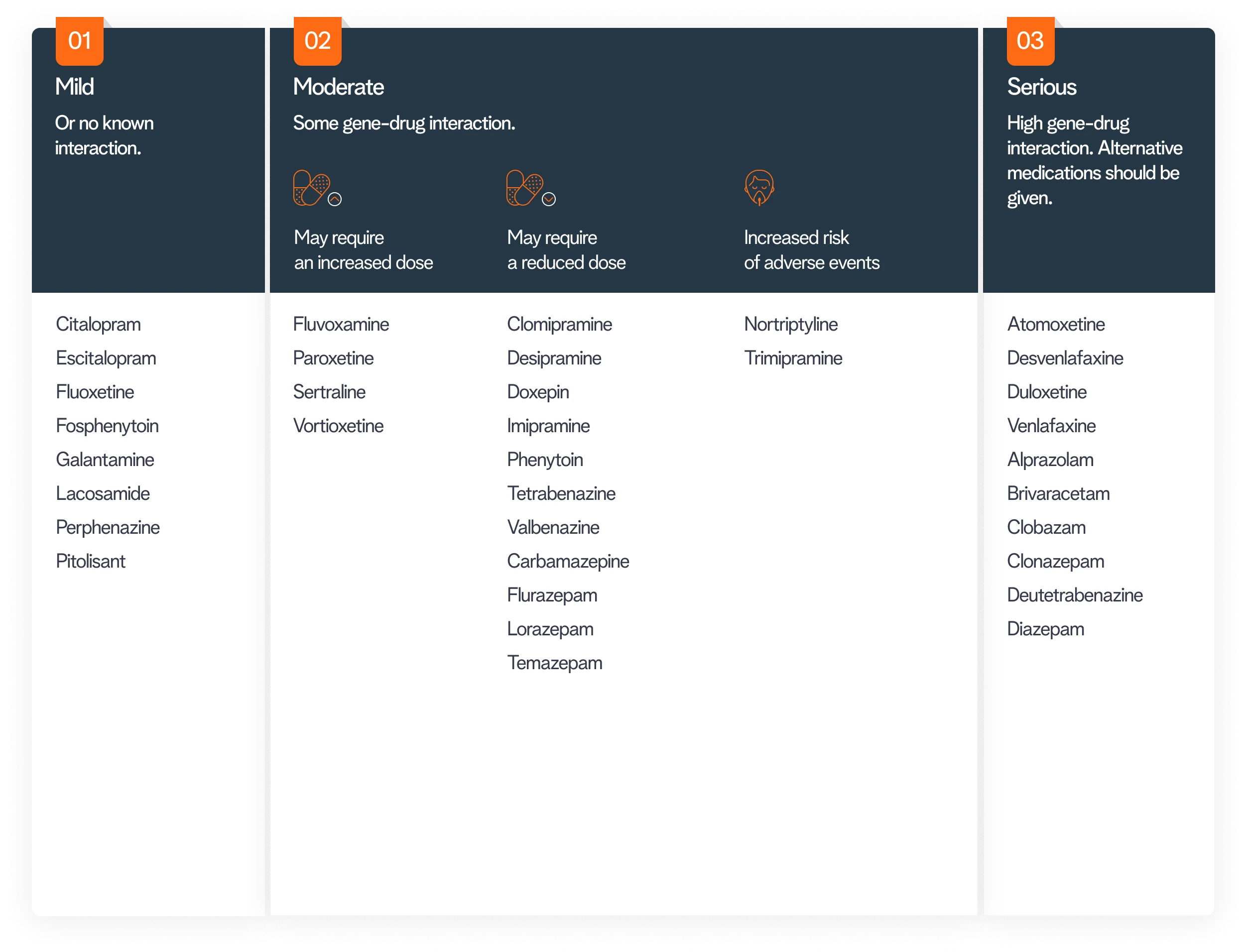
Pharmacogenomics Panel
AttoDiagnostics run genetic panels tailored for antidepressants, antipsychotics, anxiolytics, psychostimulants, psycholeptics and psychoanaleptics, antiepileptics, and other psychiatric medications to optimise treatment for conditions such as depression, anxiety, bipolar disorder, schizophrenia and ADHD.
Get a Business QuoteAntidepressants
Selective Serotonin Reuptake Inhibitors (SSRIs)
Tricyclic Antidepressants (TCAs)
Monoamine Oxidase Inhibitors (MAOIs)
Serotonin and Norepinephrine Reuptake Inhibitors (SNRIs)
Antipsychotics
Neuroleptics
How Pharmacogenomic Testing Works
Pharmacogenomics (PGx) testing is a straightforward procedure involving an at-home buccal swab or dried blood spot (finger prick blood) collection or healthcare professional led sample collection, followed by laboratory testing and results delivery. Here’s an overview of the key steps involved in PGx testing:
Step 1
Sample Collection
Our preferred method is the collection of a buccal swab from the patient. This swab can be administered in the clinic or mailed directly to the patient for self-collection at their convenience. The swabs have a long shelf life and are safe to transport by post, ensuring flexibility and ease of access.

Step 2
Genetic Analysis
The collected sample is processed in our state-of-the-art laboratory using ThermoFisher or Illumina platforms. We analyse a validated panel of drug-metabolising enzymes (DMEs) and protein transport markers known to affect cardiovascular therapies, including statins, beta blockers, ACE inhibitors, and anticoagulants. This analysis identifies genetic variations that influence drug metabolism, efficacy, and the risk of adverse reactions.

Step 3
Comprehensive Report
Your patient’s results are summarised in a comprehensive report that outlines the clinical implications of their genetic findings. The ‘Quick View’ section highlights cardiovascular medications with elevated or reduced response risks, enabling rapid clinical review. A more detailed gene-by-gene analysis offers deeper insight into personalised medication selection, optimal dosing strategies, and potential drug-drug interactions—critical for polypharmacy management and the safe, effective treatment of cardiovascular conditions.